
The Escalation Trap
American Shock and Awe returns to the Middle East. We should all be wary.
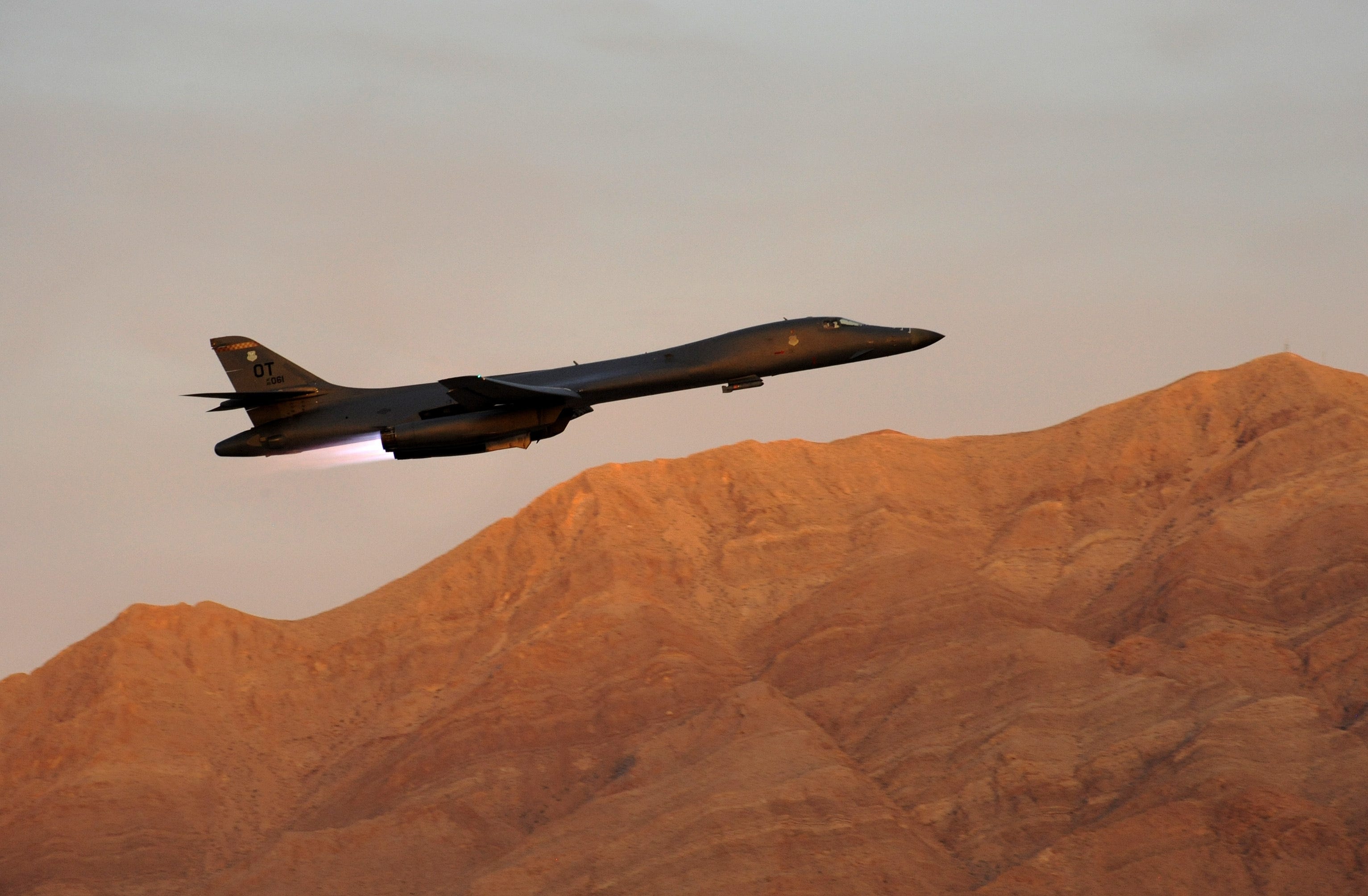
Nobody does firepower quite like the Americans.
On 2nd February, US forces conducted airstrikes against some 85 targets across Iraq and Syria. Amongst the aircraft used were supersonic B-1 Lancer bombers, immensely powerful aircraft which flew all the way from their secret base behind the Mount Rushmore faces to annihilate their foe.
Perhaps most impressively of all, the Americans were so tightly coordinated that they were able to destroy all of their targets within the space of just 30 minutes.
Those targets were various Iranian-backed militia groups which the US held responsible for an attack late last month on a US base in Jordan which left three US soldiers dead.
The real goal, however, was to send a very clear message to Iran.
When the horrific events of 7th October unfolded in Israel, people around the world braced themselves for the potential outbreak of a much wider conflict in the Middle East, especially after Western leaders declared that Iran had been funding and supporting Hamas and may have had an involvement in the atrocities.
In reality, a wider conflict had already started in the days following the 7th October atrocities. It has been escalating ever since.
We start in Yemen, where some people called the Houthis have been taking objection to international shipping.
If you hadn’t heard of the Houthis until a few months ago, that’s understandable. Whilst they have been around since the 1990s, it was the Yemeni Civil War, which started in 2014, that saw them emerge as a serious rebel movement fighting against the Yemeni government.
Importantly, the Houthi’s have managed to carve out their own little fiefdom on the Red Sea coast.
Saudi Arabia has been waging a war against the Houthis for several years, supported by both the US and UK, to apparently little avail. But whilst obstinate, these wily rebels were of little concern to most of us in the West. That is, until they developed a fun new little hobby called “Trying to sink ships with ballistic missiles”.
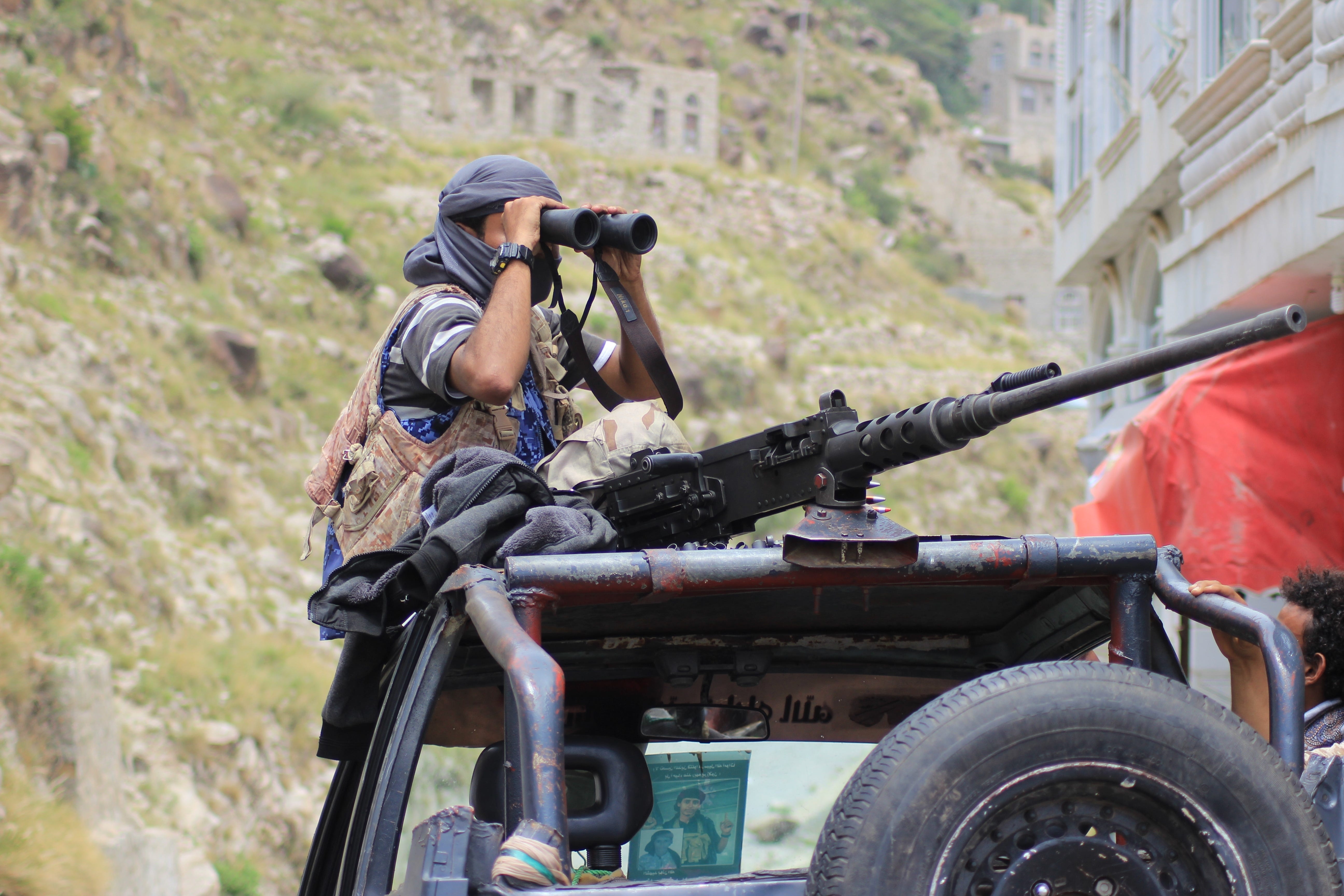
At the heart of it, the Houthis claimed that they were only targeting Israeli-linked ships, apparently giving them some sort of moral high ground both at home and in the West, stating that the attacks were in solidarity with Hamas and that they would stop if Israel withdrew from Gaza.
This was tremendous news for that particularly unpleasant brand of ‘activist’ who thinks Hamas are just misunderstood teenagers with a passing interest in airborne hobby sports: just end the most complicated conflict in the history of humanity and we can all get back to our cortados and brunch.
Unfortunately, after attacking a very inclusive range of Red Sea shipping, the his made it quite clear that their definition of ‘Israeli-linked’ in fact seemed to include absolutely any vessel which is currently on the water. Back to square one then.
For a while, the Houthis tried to attack vessels in person. But the usual tactic of driving up to a target cargo ship in small boats wasn’t so much a threat as an inconvenience…Somali pirates have been attempting such stunts for decades, with limited success, asides from that one time when Tom Hanks was no longer the captain now. Oftentimes on board private security teams are sufficient to deter such attacks.
Besides, the complete inadequacy of cruising up to a big, expensive ship in a little speedboat and nicking it was amply demonstrated when the Houthis tried exactly that in December. The US Navy, who apparently had little else going on that afternoon, opted to meet the Houthi small boats with an MH-60 Seahawk helicopter which, in a display of good old fashioned American overkill, promptly fired off four hellfire missiles to ‘neutralise’ the incoming vessels.
I wonder if Rishi Sunak felt some jealousy that he couldn’t employ a similar tactic against an entirely different sort of small boat a little closer to home. Anyway…
Unfortunately for people who like plastic or warm homes (or anything else imported from beyond the Suez Canal), the rascally Houthis quickly realised the error of their ways and resorted to more impersonal means. They now attack the vessels which transport 15% of the world’s seaborne trade with anti-ship cruise missiles, anti-ship ballistic missiles and one-way attack drones (also known as kamikaze drones, but without all the saké and headbands).
As an aside, if you’re wondering what the difference between an anti-ship cruise missile and ballistic missile is, one flies roughly horizontal to the sea and the other follows a parabolic arc. Both ruin your boat.
The US and UK did the obvious thing and deployed some naval power to the Red Sea, forming a loose coalition to try to protect cargo shipping. The warships, based around the Americans’ favourite unit of measurement for naval prowess, the Carrier Strike Group, spent several weeks shooting down the Houthi drones and missiles, some of which targeted coalition warships directly.
And whilst it’s the only one which currently works, our very own HMS Diamond, a Type 45 destroyer with an air defence radar so powerful that it makes staring directly into the Ark of the Covenant seem like a safe thing to do, proved itself extremely competent at defeating such attacks.

And then somebody did some maths on the side of a polystyrene coffee cup and discovered that each of our very excellent Sea Viper interceptor missiles cost £1 million and that, whilst taking out cruise missiles was one thing, it probably wasn’t wholly cost effective to use them to destroy drones that had been purchased on Yemeni Amazon for a few rials.
So, faced with an unsustainable naval mission and with the costs of shipping rerouted around the Cape threatening to drive up prices at home, on 11th January the US and UK launched a wave of airstrikes against the Houthis.
It was a faultless plan: dispense a little Old Testament smiting from above and persuade those Yemeni rebels to get back to counting sand or whatever they were doing before. It didn’t work.
Like a lot of things that are frowned on by wider society, once you’ve started blowing up ships, it’s quite hard to stop. And so, the Houthis have been continuing their attacks and we’ve been continuing to mount airstrikes to persuade them not to.
And then, something happened in Jordan and it all got a bit hairy.
On 28th January, three US soldiers were killed and dozens wounded in a drone strike against a base in Jordan. Joe Biden said it was carried out by “radical Iran-backed militant groups operating in Syria and Iraq”. Putting a name to these groups, the Americans later identified the Islamic Resistance in Iraq (splitters), an umbrella organisation for like-minded jihadists from smaller militia groups operating in the region.
This is where we get to the thread that ties it all together: Iran. Or to be more accurate, the Iranian Revolutionary Guards Corps, a strange and amorphous socio-military-governmental entity which exercises considerable influence over Iranian foreign policy. If you recall, it was the head of a division of the IRGC called the Quds Force, Major General Qasem Soleimani, who was assassinated in a US drone strike in 2020.
The IRGC has become a bit of a pantomime villain in the West in recent years, but they have their fingers in all of the major Middle East pies. They fund, arm and support Hamas and Hezbollah, for example, as well as the Houthis in Yemen, and a veritable medley of militia groups across Iraq and Syria, which the Iranians call their ‘Axis of Resistance’.
It is no secret that the regime in Tehran wants to see the back of American presence in the Middle East, whom they label ‘the Great Satan’, (they used to call Britain the ‘Little Satan’, until our general global decline left us bereft of that catchy moniker…maybe we can get it back).
What is less well-understood, is that Iran has been fighting a proxy war with the United States (and Israel and Saudi Arabia) in the region for several years. This has intensified in recent months: Iranian proxies have mounted over 160 attacks on US forces in Iraq, Syria and now Jordan since the October 7th attacks in Israel.
The death of US troops, however, was the final straw for Washington and strikes against the IRGC and its proxies were inevitable. Rather ominously, Joe Biden has promised more strikes “at times and places of our choosing”.
But the attack against the US base in Jordan itself demonstrated why that initial round of airstrikes against the Houthis in Yemen was so risky in a region seemingly one muffled geo-political sneeze away from ‘all-out’ war, and also largely ineffective: attack one Iranian proxy at one end of the region, and you had better watch your back everywhere else.
Blood begets blood. Joe Biden had to do something over the attack in Jordan; to not would have been damning to his credibility, both internationally and domestically. But having withdrawn from one war at the start of his presidency, Biden isn’t very well going to bookend it by getting into a new one...is he?
The good news is that whilst the regime in Tehran clearly welcomes a bit of regional instability, not least to distract from domestic unrest which has been simmering for several years now, most Western analysts think it unlikely that Iran is seeking a full-scale confrontation with the US anytime soon.
But US strikes against Iranian military targets, if not on Iranian territory itself, will likely require a weighty response from Tehran in order to save face. In the never-ending game of ego chess that is international relations, it’s now their move.

More worryingly still are those many militia groups which the IRGC has cultivated across the Middle East. Just like the Houthis, basking in the limelight of Western scorn, they are unlikely to back down, even if their sponsors in Tehran tell them to do so. The IRGC may be very adept at sowing the seeds of chaos, but that doesn’t mean it can control what has grown out of them.
It is true that a long-term ceasefire in Gaza currently seems the single most likely thing that can cool tensions across the Middle East. The ongoing conflict there is no longer the festering wound it was for so long, but rather a catastrophic arterial bleed.
But Iranian proxies were attacking US and Israeli interests before October 7th and there is little to suggest that they would stop after a ceasefire.
Indeed, the grim paradox may be that these groups would see a ceasefire as vindication for their tactics and increase their demands. As long as there are Israeli forces in Gaza, ceasefire or not, I suspect the Houthi strikes on shipping and the attacks on US bases will continue.
Or perhaps, as conflict in the Middle East now spreads well beyond Israel and Gaza, what happens there will have less influence on events than we would like to think.
America now finds itself in a troublesome position: once you have used force, you have to use more next time than you did last time, otherwise you risk looking weak or just not very serious.
And so the US (and, to a lesser extent, the UK), seems able only to throw a whole lot of lead around the place and hope people get in line. That’s not leadership.
The Houthis have already defied the British and Americans by continuing their attacks even after successive rounds of airstrikes. Trying to save face, Western officials have said that they are in fact trying to degrade the Houthi’s ability to launch attacks, as opposed to deter them with displays of force, but this is not a plausible strategy when your enemy can regenerate faster than you can (laser-guided bombs aren’t cheap either).
If Tehran or their proxies decide to defy the US after this series of strikes in retaliation for the Jordan attack, like the Houthis have done in the Red Sea, then Biden may feel that he has no choice but to up the ante once more, especially if more Americans are killed. And there are already reports of renewed attacks against US bases in the region.
The escalation ladder makes it difficult to step down a rung. Don’t get vertigo.
Brilliant! Another well articulated, insightful, and at times humorous read!